Iowa, Oklahoma, Texas, Arkansas, and back to Iowa (2025).
I had a friend from the U.K. tell me once that one of the many differences between people living in the U.S. and those in the U.K. is Americans think 100 years is a long time, while Brits think 100 miles is a long way.
This summer, my family and I took approximately a 1,400-mile round trip from Des Moines, Iowa, to Dallas, Texas—and back again. Curious, I asked the internet how many countries one would pass through in Europe when traveling the same distance. The answer? Six to eight countries, depending on the route. 😮
As we drove from Des Moines into Missouri, the roads grew hilly, and flashes of green—cornfields and trees—streaked past our windows. By the time we reached Oklahoma, the land had flattened, and the soil turned sandy in color compared to the rich brown I was used to back home.
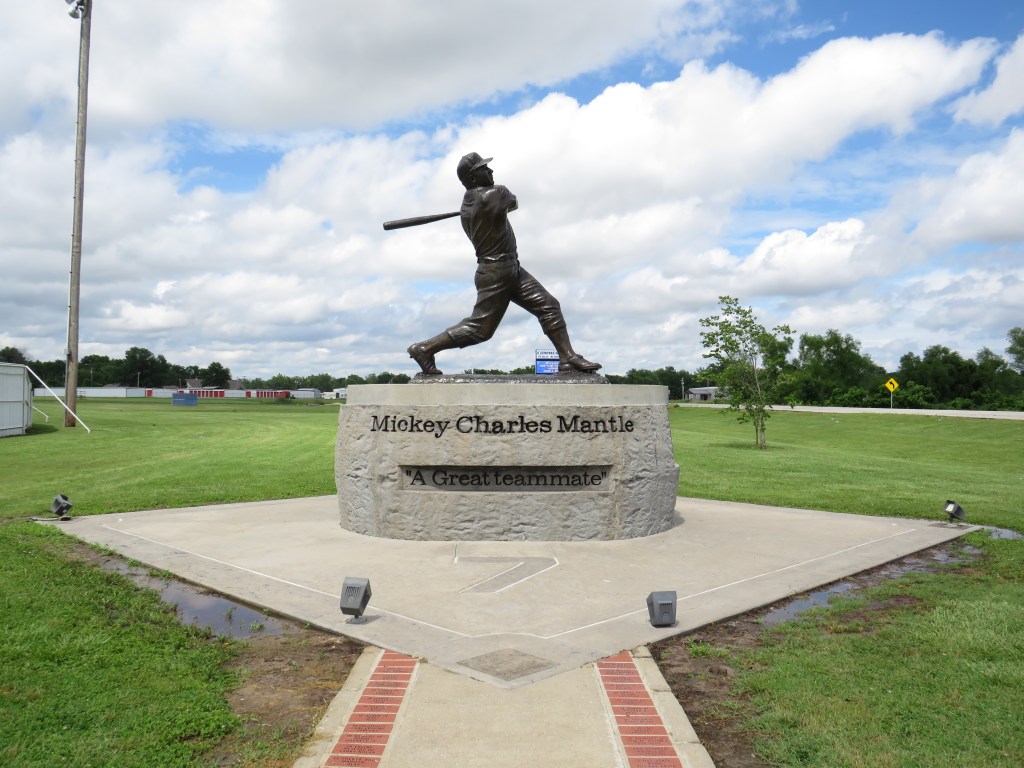
Our first stop was Commerce, Oklahoma. While my husband is a HUGE L.A. Dodgers fan, he’s not above paying homage to one of baseball’s legends: Mickey Mantle. The statue stood out in several ways, and the winding path that led to it was both unique and memorable.
From Commerce, we followed the old Route 66, snapping photos of iconic signs and roadside memorabilia. Route 66 was once a staple highway connecting the Midwest to the West Coast. During the Great Depression, it became a lifeline for those fleeing Oklahoma in search of a better life in California.
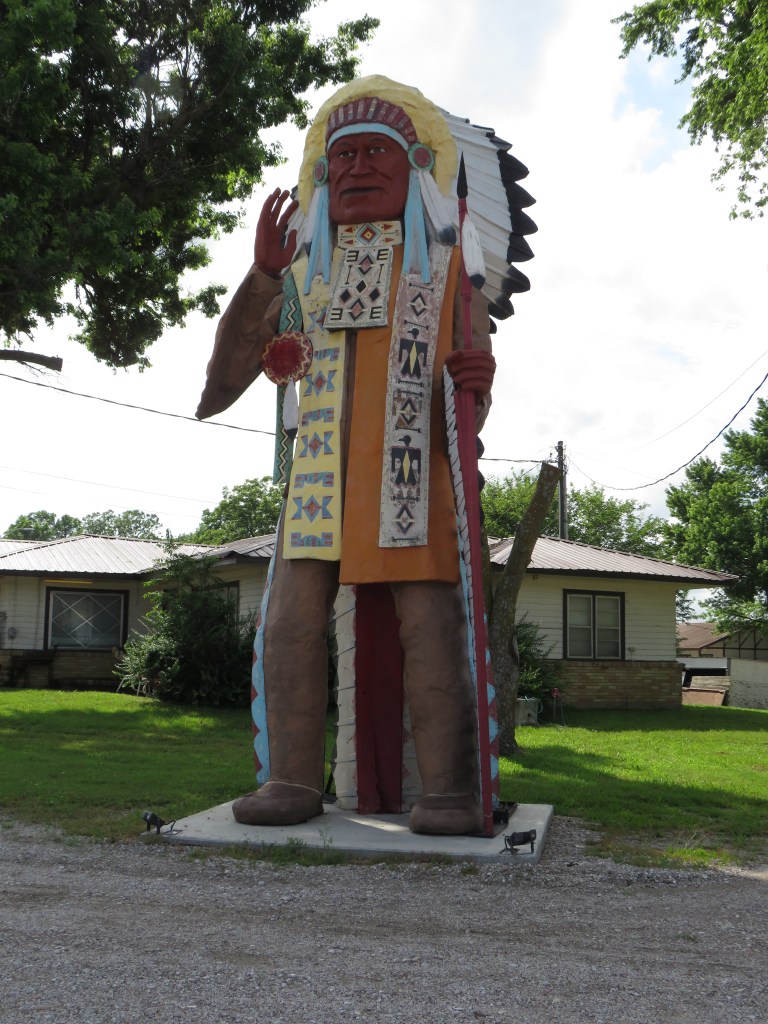
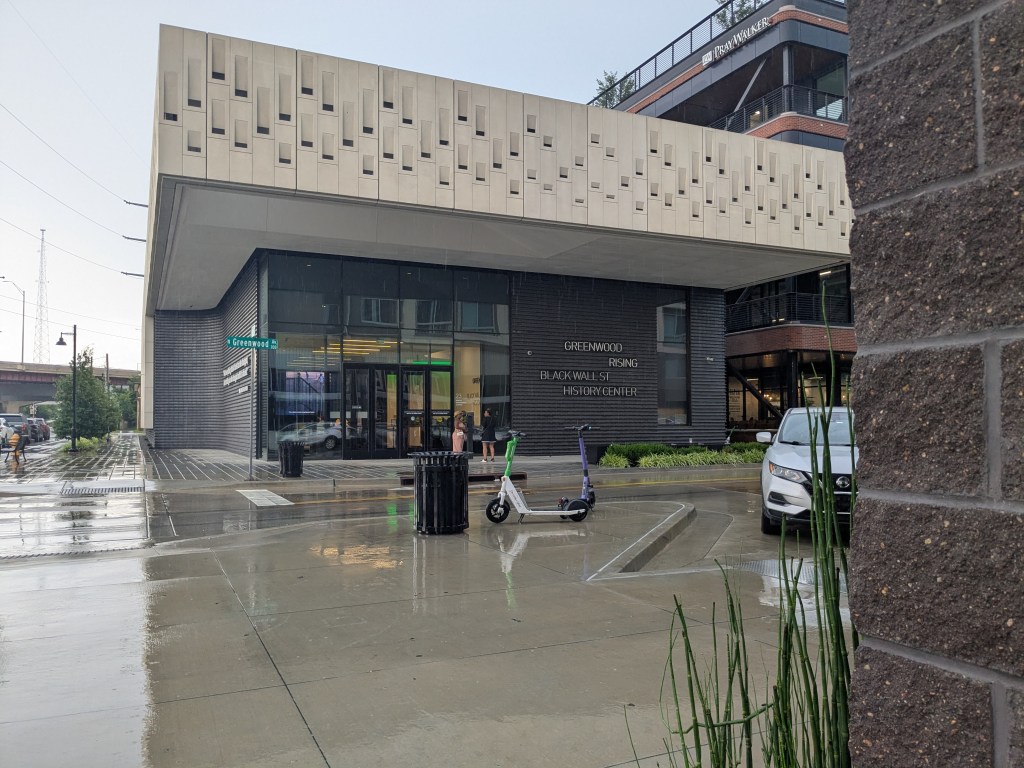
We spent several days in Tulsa’s Greenwood District, exploring historical sites, savoring local food, and catching a soccer game. One moment that struck me during our first evening walk was the opening line from John Mellencamp’s “Pink Houses,” referencing redlining. I-244 cuts directly through the heart of the neighborhood. Despite the rain and humidity, we toured the Greenwood Rising Black Wall Street History Center, which documents one of the most horrific acts of domestic terrorism in U.S. history. Leaving the museum, I felt hollow inside—and I still feel that way writing this. My family and I had deep conversations about how we grapple with such violence in our past. None of us had a definitive answer, but we all agreed: forgetting is not an option.
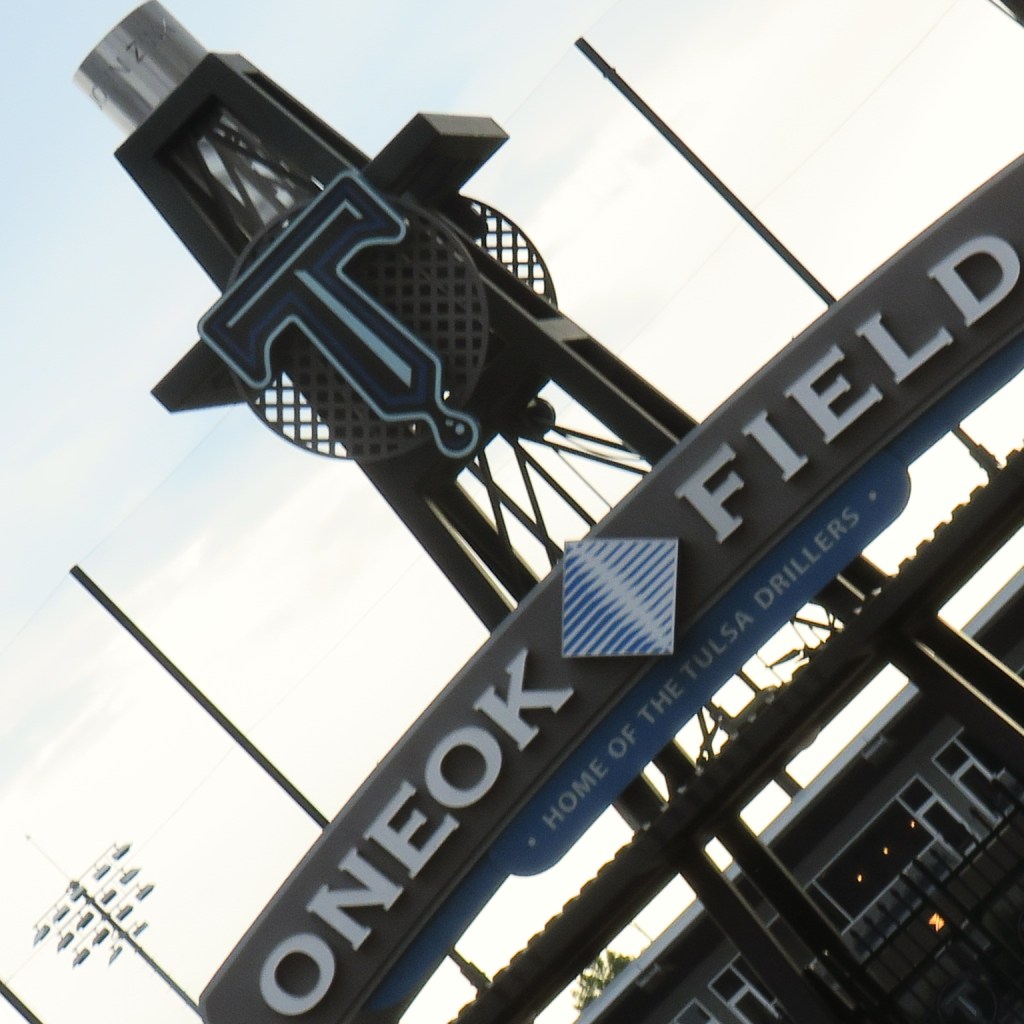
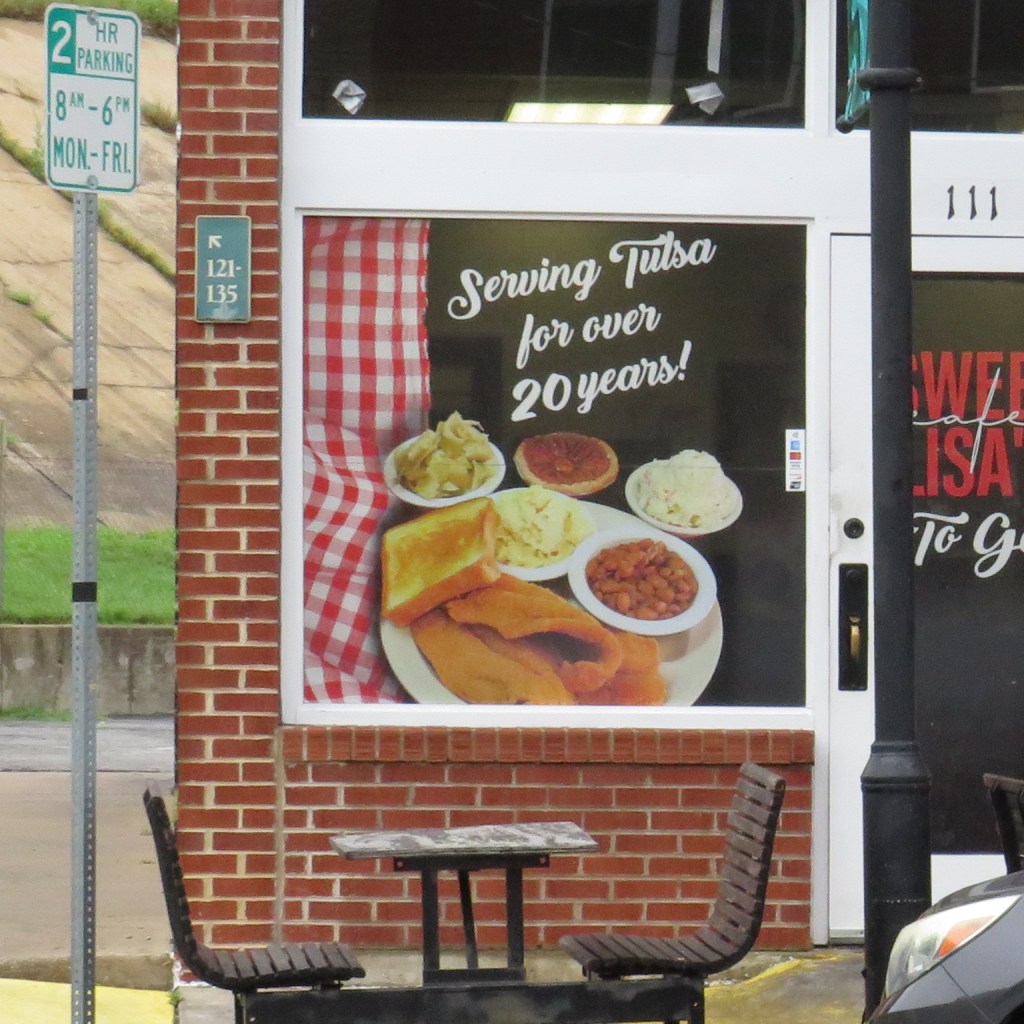

The food was phenomenal! We ate lunch at Sweet Lisa’s Cafe, which specializes in soul food. I had the fried catfish—its breading was perfectly crisp, and the meat was white and flaky. Later that afternoon, we visited Cobbler Mom. My mouth waters just thinking about it. The fruit was fresh, the crust was flaky, and the generous portion was topped with ice cream (I chose peach). Trying to walk off some of the indulgence, we admired the historic plaques on buildings and sidewalks and stopped into a local bookstore for a literature fix. That night, still full, we headed to the stadium for an FC Tulsa match.
From Tulsa, we traveled another 240 miles to visit family in Texas. On our return north, the weather turned tempestuous, and we found ourselves trying to stay ahead of the storms. We made one final stop in Springdale, Arkansas, to catch the Northwest Arkansas Naturals play a home game at Arvest Ballpark.
Covering the distance of six—maybe eight—European countries made me reflect on the vastness of the country I live in. The food, the landmarks, and the conversations we shared along the way reminded me that travel isn’t just about distance. It’s about connection—and the stories we carry home with us.
THE Pizza Place (2024)
Blue Springs, Missouri
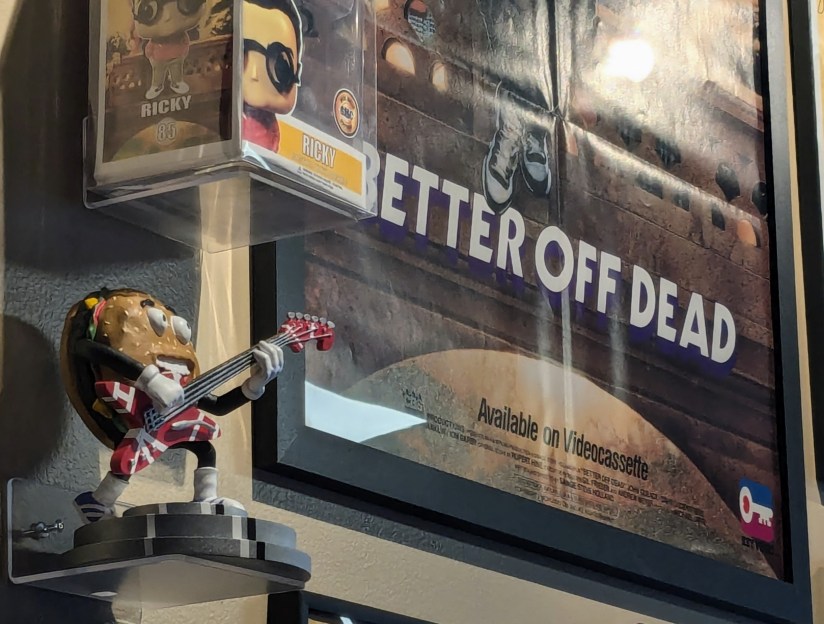
I fell into the trap faced by many Xennials of watching movies as a kid that went way over my head. Better Off Dead released in 19851 is one of them.
The protagonist, Lane Meyer, is despondent after the break-up with his girlfriend Beth. He tries various cometic failed suicide attempts, experiences taunts from his girlfriend’s newest boyfriend and eventually faces his anxieties with the help of the French foreign exchange student next door and his best friend.
A great pizza place in Blue Springs, Missouri gives homage to this movie with its wall of memorabilia.2 The food was really good too. My son enjoyed the Spaghetti Bolognese while my husband and I tried the “the meats”. The crust was hand-tossed Louis style brushed with butter and garlic. Generous portions of meats and mozzarella cheese topped the pizza. I awarded it extra points for the crunchy pepperoni.
The staff was extra friendly and the kitchen was speedy. The owner’s spouse took the time to ask where we were from, how we heard about the place, and explained the provenance of some of the things in her husband’s Better Off Dead collection.
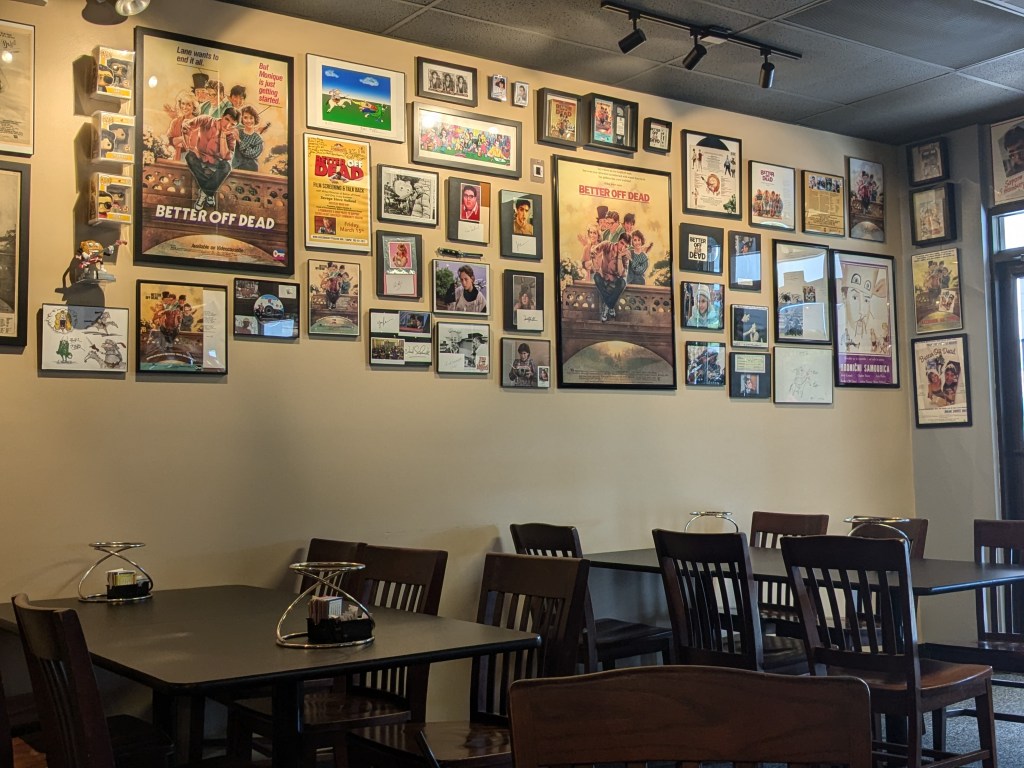
Overall THE Pizza Place has great food, a good atmosphere, and their pleasant staff made this a memorable visit. If you ever find yourself heading southeast from Kansas City, make sure to give THE Pizza Place a try in Blue Springs, Missouri.
Sources:
- “Better Off Dead,” IMDB, 2024, Accessed: 15 September 2024. Better Off Dead, Savage Steve Holland, director, with John Cusack, Diane Franklin, David Ogden Stiers, Kim Darby, Amanda Wyss, and Curtis Armstrong, DVD, Paramount Pictures Home Entertainment, 2002, 97 minutes. ↩︎
- “THE Pizza Place.” 2024. Accessed: 15 September 2024. ↩︎
Gilmore Car Museum (2023)
Hickory Corners, Michigan
Prepare to drive some winding Michigan back roads to get to Hickory Corners, Michigan. Gilmore Car Museum is a 90-acre museum devoted to the history of 19th and 20th-century transportation. Not only can you see pre and post-WWII cars, but you can also get rides in various cars in their collection from their knowledgeable volunteers.
One of the best features of Gilmore Car Museum is its Model T Driving Experience.
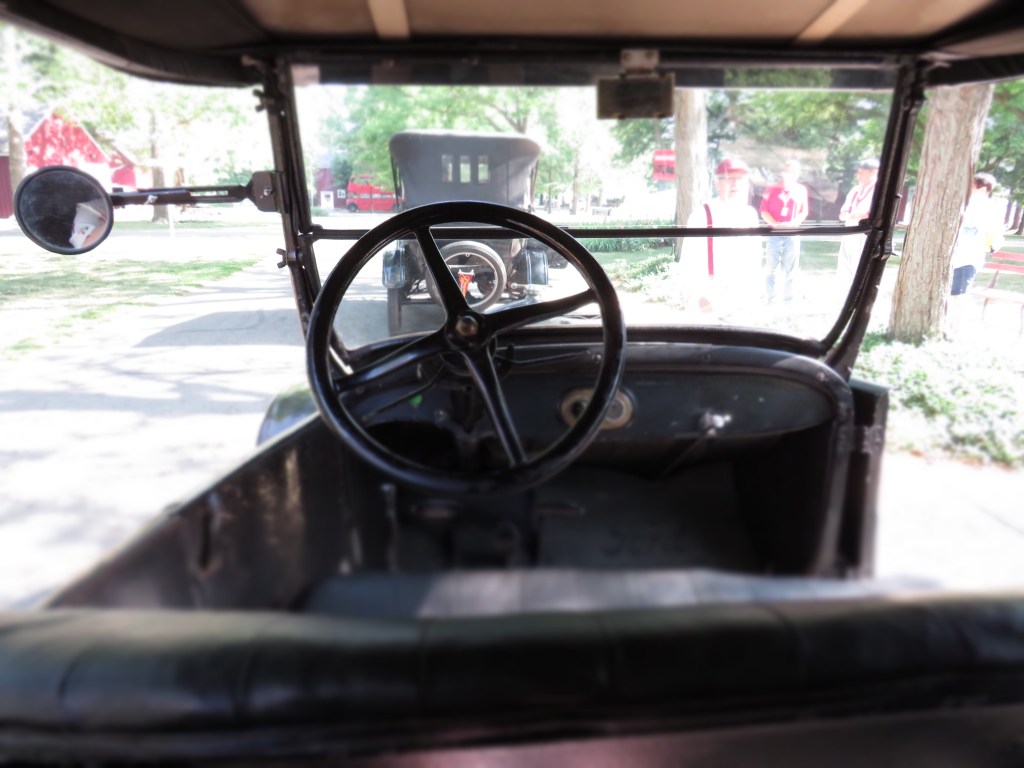
Henry Ford’s Model T assembly line made the automobile affordable for the masses. From 1908-1927 nearly 15 million cars were sold. The Model T was rugged, durable, and anyone could learn to drive it in a day.
I tried my hands and feet in the 1919, 1924, and 1926 models. I learned how to use the choke and throttle (on the steering column) alongside the three foot pedals (clutch – it’s not what you think, backward, and hope/brake). I read once that you had to be an octopus to drive a Model T and the author who said that wasn’t too far off.

It was the smaller details that grounded my experience. The leather seats were roomy and comfortable. To get the Model T into high gear, I’m below five feet, so disengaging the brake all the way to the floor was challenging. I had to shout to be heard over the engine’s steady roar and clicks. The wind striking my face at the top speed of twenty-five miles an hour burned the stench of gasoline into my nostrils. It was a different driving experience from a time when the goal was to get me from point A to point B. Arriving there safely was a bonus.
Jordan House (2023)
West Des Moines, Iowa
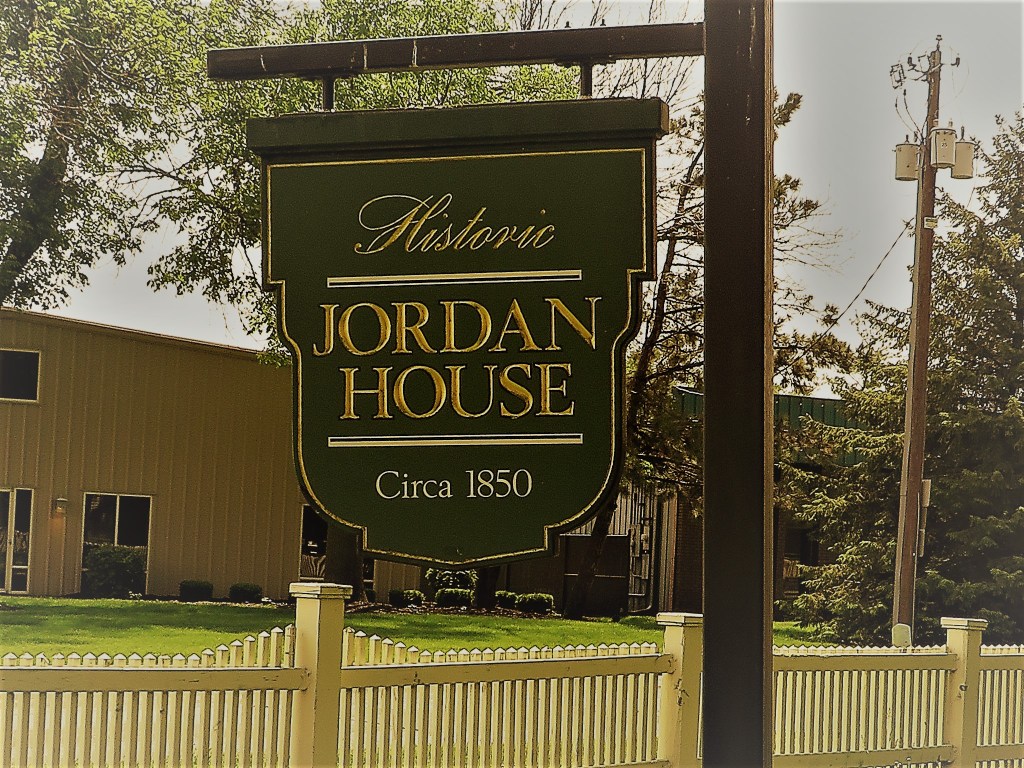
Occasionally, I drive the main thorough fair of Grand Avenue in Des Moines and West Des Moines. I’d pass a pasture with derelict buildings that look like the ghost of a summer camp. I never took the turn to explore until recently.
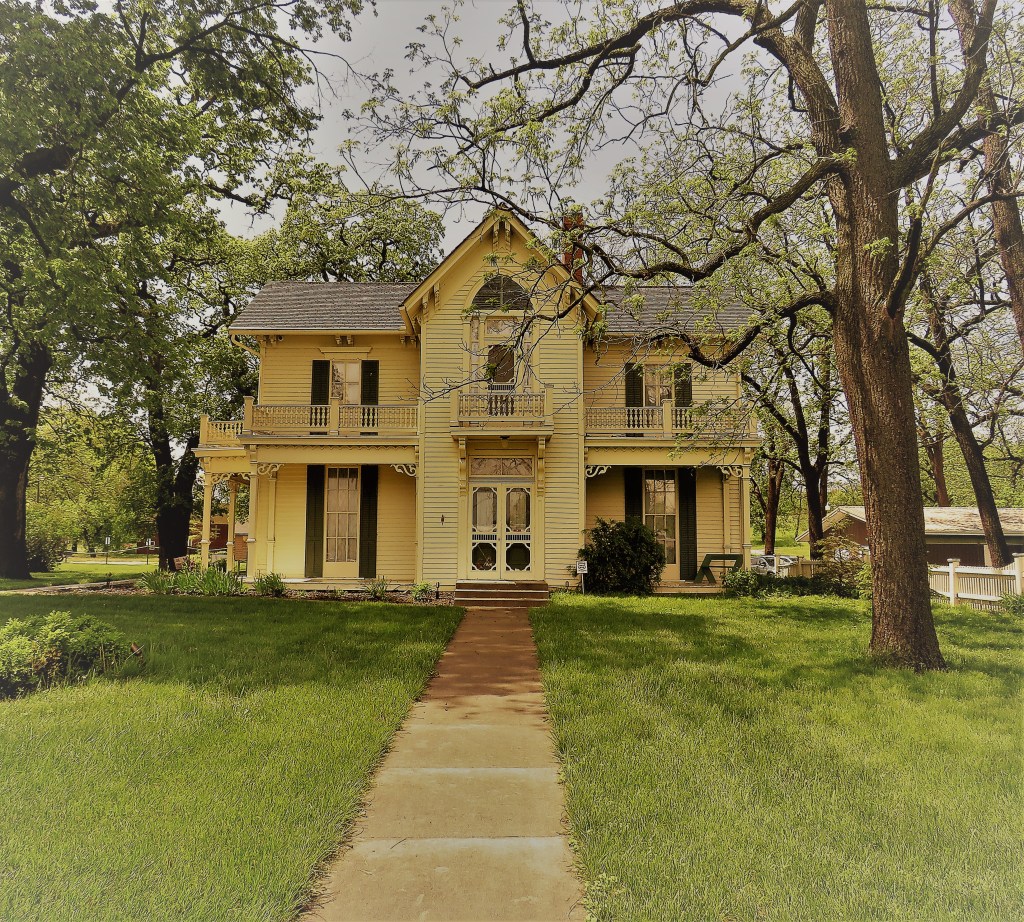
Behind the campgrounds was the Jordan House. Once a Victorian Gothic farmhouse owned by cattleman, James C. Jordan. It rained and I waited out the storm in my car. Once it passed the sun came out. The raindrops glistened on the leaves of all the mature trees. Entering through the back porch, I was greeted by knowledgeable tour guides stationed on the first and second floors and the basement. The first floor concentrated on Jordan’s personal life. Upstairs, the historical perspective shifted and widened including the history of the summer camp for the Church of Nazarene (ha! I was right), and West Des Moines. The basement centered on Jordan’s political activities, especially those involving the abolition of slavery.
The Jordan House was purchased by the West Des Moines Historical Society in 1978 and continues as a museum. If you’re looking for an emersion into Iowa history for a couple of hours, the Jordan House will not disappoint.
Famous Iowa Trees (2020)
Brayton, Iowa & Exira, Iowa
Tree in the Middle of the Road

Off Interstate 80 and up and down steep minimum maintenance roads, and at the convergence of four intersections, sits a giant cottonwood some 100 feet in height and 20 feet in diameter.
Plow in the Tree
Roughly thirteen miles away sits another famous tree. Alongside Hwy 71 in a small park is The Plow in the Oak. Local legend has it a farmer upon hearing of the Civil War, set his plow against an oak tree, and joined the Union never to return. Paul Walther, the agriculturist for Audubon County, said there could be some truth to the legend as the oak does predate the Civil War (Klingaman).
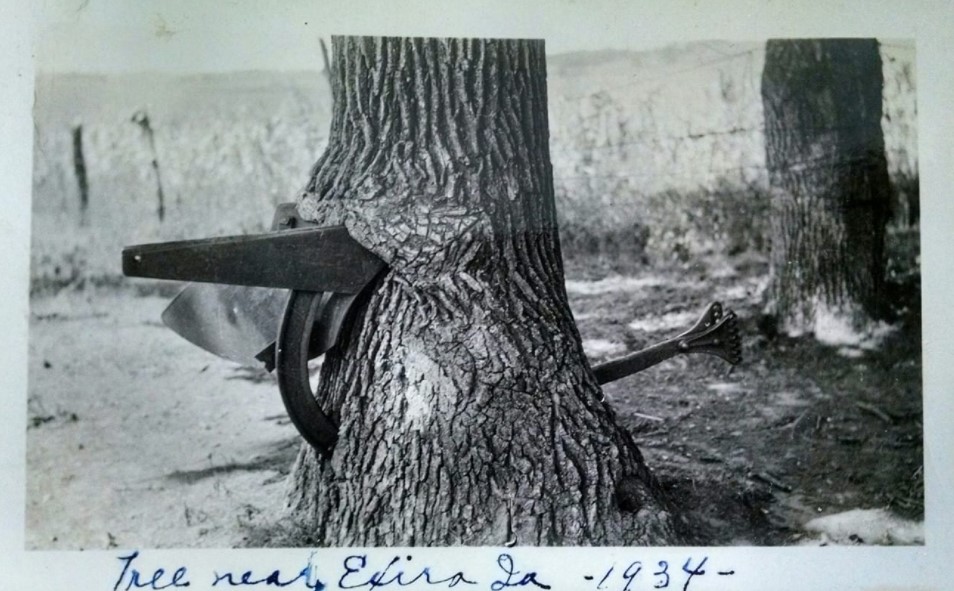
An image from Shari Beymer on Facebook from 2018, shows much more of the plow in 1934.
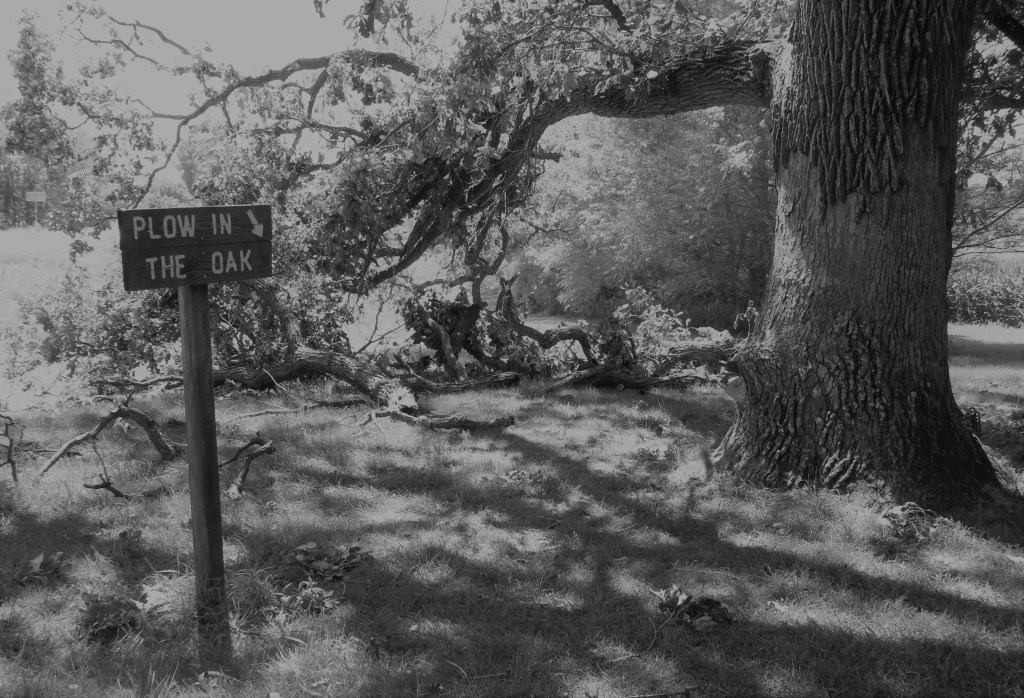
By 2020 the oak has pretty much swallowed up the plow.
If you feel like you want to take a scenic drive to one or both of these two famous Iowa trees, you won’t be disappointed.
Directions:
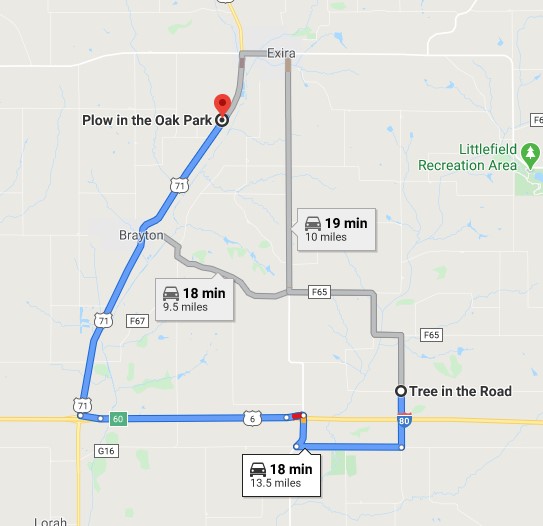
- Tree in the Middle of the Road: Tree in the Road, 2401-2449 350th St, Brayton, IA 50042
- Plow in the Oak: Plow in the Oak Park, Exira, IA 50076
Local Tours (2019)
Des Moines, Iowa
September 7th & 8th marked the Twenty-Second Annual Riverbend Walking Tour. This neighborhood was once a thriving city called North Des Moines then later a suburb when the city of Des Moines went on an annexation spree in the 1890s.
This neighborhood is slowly making a comeback. Some interesting renewal/project revitalization is occurring on 6th Avenue and many of the larger homes are getting restored, while many others sit in different levels of decay.
I went on a tour several years ago. Mrs. Huegle’s School @ 1811 Oakland had been on my previous tour. Other than it is for sale again, I didn’t see much improvement.
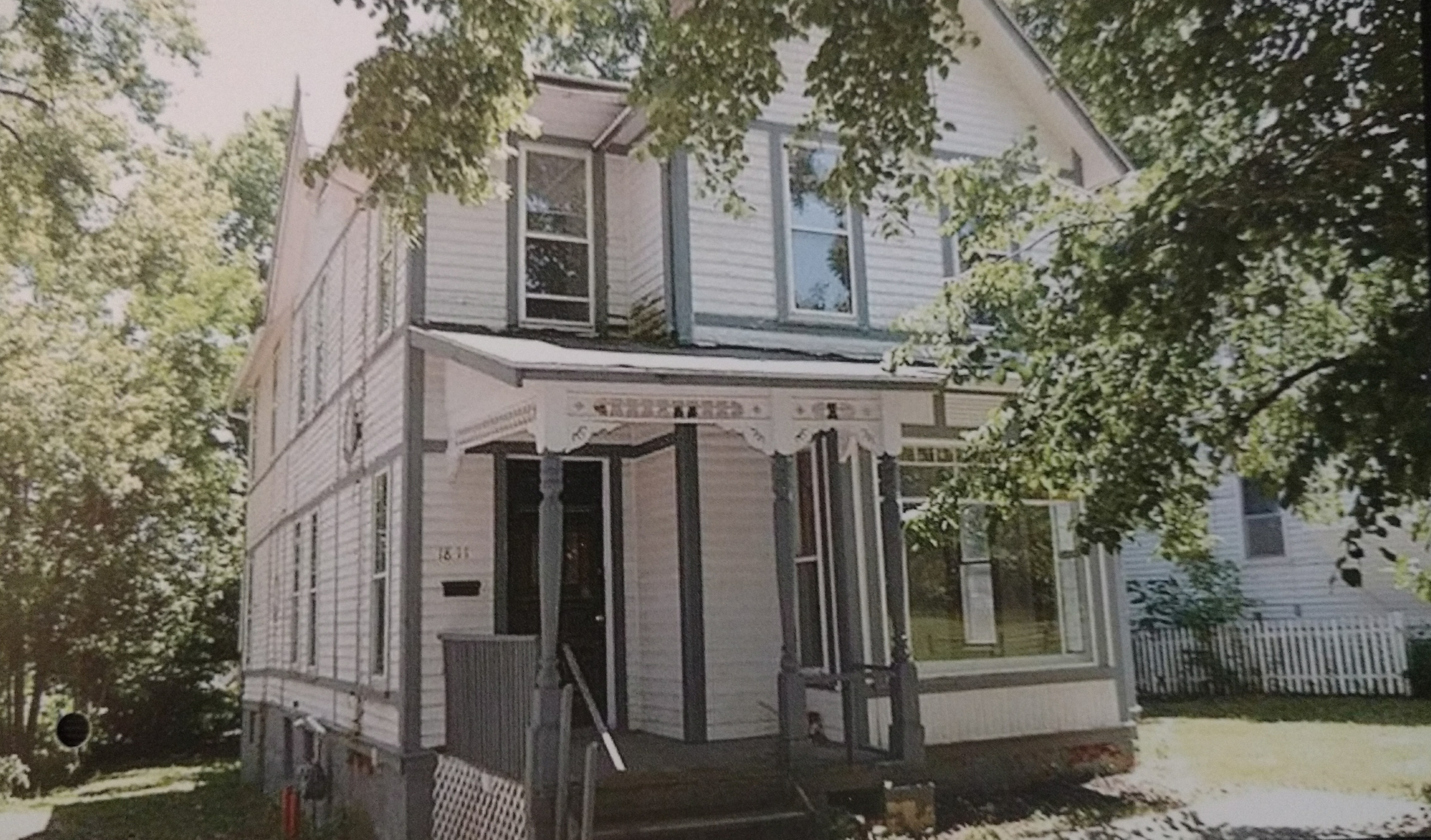
Mennig House – 1710 7th, while wonderfully restored felt like a nice middle-class home of the 18th century. Nothing too fancy or extravagant. And there’s nothing wrong with that.
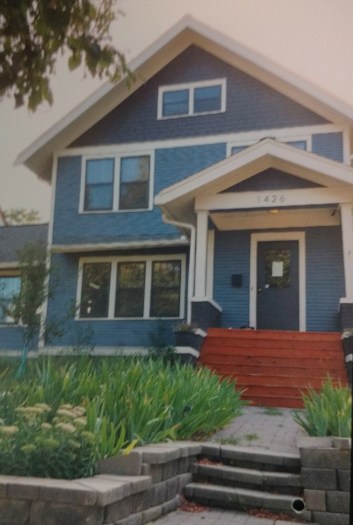
The Stevenson House (1942 Arlington) and Villa Franca (410 Franklin) were humongous restored behemoths with stairs, stained glass, and ballroom. Villa Franca’s woodwork was dark and created a rather cool environment. Where The Stephen’s house felt warm and full of light. The view of the Des Moines River from the ballroom was very cool. I also tour the carriage house now converted into a very small apartment.
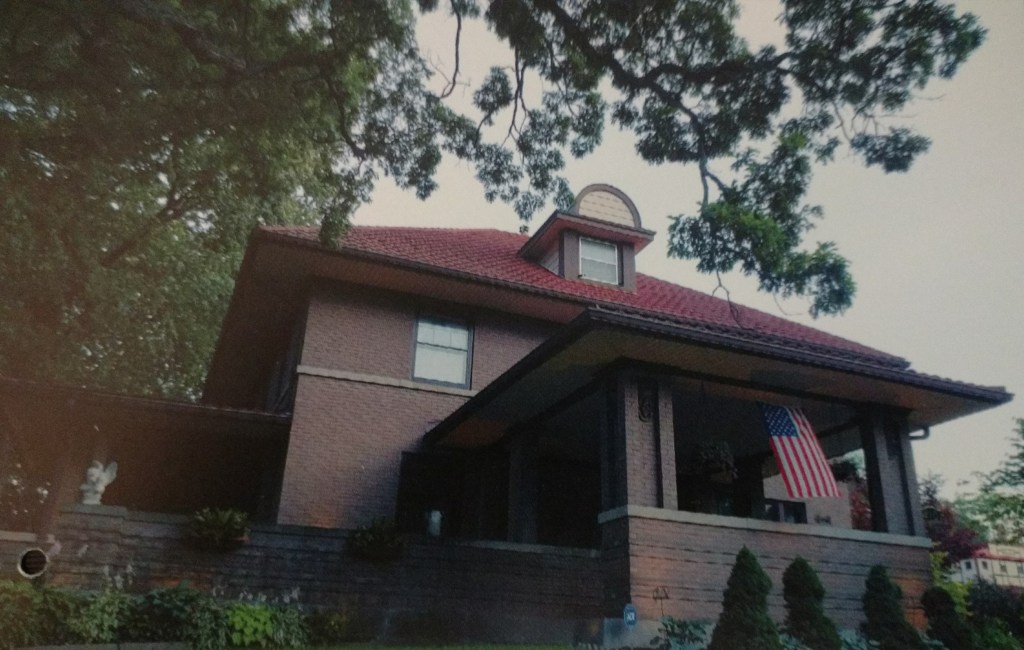
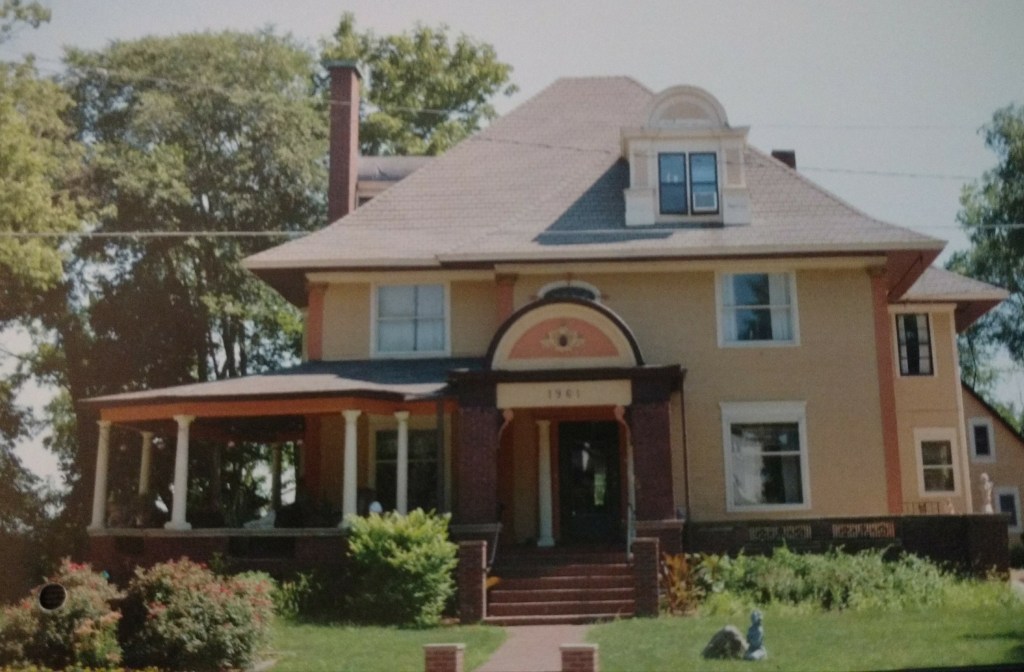
At the edge of 6th Avenue sits the old North Des Moines City Hall. A meeting and place of business city officials before annexation. The large brick structure was completely gutted. From the outside, it appeared the facade was in a state of a murky revival contingent upon funding I hope they are able to get. The guide stated they are still looking for early photographs of the building when it served the northern suburb as a city hall. So if you know or see any such photos reach out at this location.
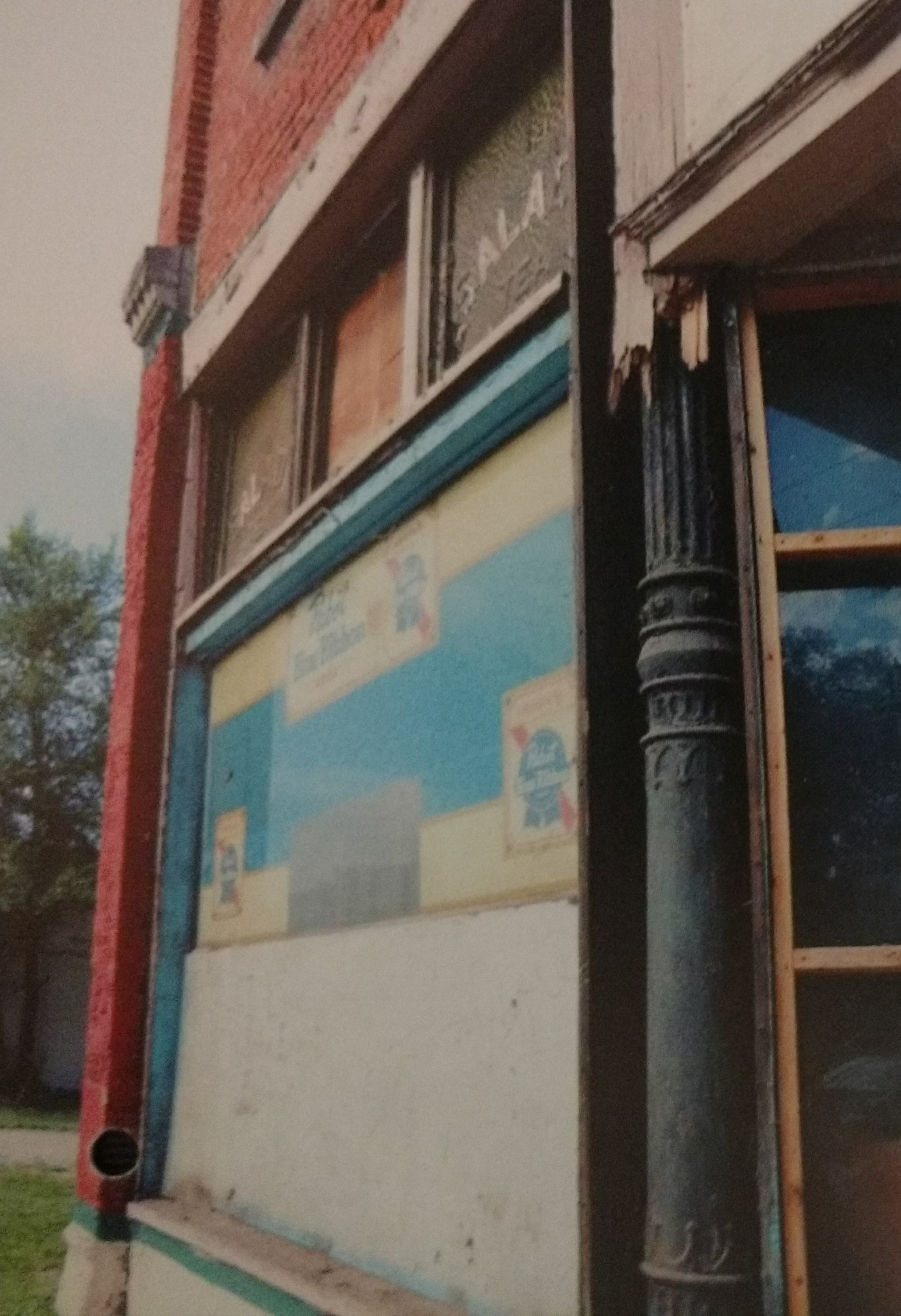
Not all the homes were available to be viewed. That is understandable, and I there was a few I just didn’t have time to get to. If I do this again next year I’ll plan out a whole day to walk or take the trolly from house to house.
Sesquicentennial (2019)
Menlo, Iowa

Off Interstate 80 shin-high corn stalks ran alongside a Guthrie County blacktop as it curved then straightened again before coming into Menlo. A small community of only 300 + people. The main street wasn’t brick or even concrete, but fine gravel. And a few old brick buildings remained. The normally quiet town was bustling with activity. And why not? If I was 150 years old, I’d want to celebrate too!
I’ll admit I didn’t drive 40+ miles to entirely celebrate Menlo’s Sesquicentennial. I came for the train. A genuine steam engine powered by coal and pulling original 1928 Pullman cars (and the proceeds of the tickets went to Menlo’s Fire Department). IAISRR is sponsoring many such rides throughout the summer. So check out various small-town Iowa Facebook pages to see if this steam engine may be passing through your community.
I was surprised by the sound of the steam engine. Where the diesel-powered engine I can often hear bellowing in the distance somewhere from my front yard, the steam-powered engine gave off a high, shrill whistle, with breaks in between resembling small sighs. Black smoke floated on the air and carried with it the pungent sulfuric aroma. Behind the engine was a car piled high with coal followed by several passenger cars. I was mildly disappointed to find a diesel engine instead of a caboose at the end. As the train eased to a stop and blew out a large puff of steam, whatever disappointment I felt was replaced with a sort of giddy flutter in my stomach. I was actually going to be a passenger on this train instead of a spectator.
The conductor used a loudspeaker to get everyone’s attention. You had two options load from a wooden ramp or take your chances and board the old-fashioned way. The step from the ground to the metal stairs wasn’t as steep as I thought it would be (I’m 4’10”). We were told to go all the way to the end of the car and find a seat.
All the windows were raised and a cool breeze greeted us as we moved from car to car. We found a seat in the final passenger car behind the diesel engine. The metal interior had been painted a teal where the seats faced each other and was a darker shade of faded green (the seats actually moved so they could also have seats going all in one direction).
The conductor came back to explain the trip and provide a little history of railroad transportation in Iowa. Coal engines were used up until the 1950s. So to conserve their resources, the steam engine would take us 20 miles west then the diesel engine would pull us back. The conductor asked for our tickets. Each conductor had their own punch so if there were any questions about a fare, one could go to the same conductor (the half punch was for kids since they cost half the normal fee).

With a shrill whistle and a small jerk, the train began to creep away from the town of Menlo. The constant clattering of metal on metal and the intervals of the train whistle made conversation difficult. Coal smoke drifted by and my husband pointed out the windows were dirty with soot. Then I touched the top of my dress signaling him to look at his white shirt only to discover I had just as many tiny specks of coal on my purple dress.
Cornfields, creeks, and trees scrolled across the opened windows. The jerkiness at the beginning calmed somewhat into a pronounced sway as if I was being pushed side to side by a strong, yet somewhat lazy breeze. There was a small incline at one point when I noticed the grade was as high as the treetops before it came back down into fields lined with corn and soybeans. At various gravel roads, there were people taking pictures or filming. My son waved at them enthusiastically and they waved back. We were greeted by the same enthusiasm by the residents of Casey until a few miles later the train began to slow and then stop signaling our return to Menlo.
The diesel engine gave an ear-splitting bellow that made even the conductor wince. From there the engine picked up with a much faster speed and a far smoother ride repeating the same destination only heading east this time. When the train finally pulled into Menlo, there were more people waiting to take a ride then when we had boarded forty-five minutes ago. And the humidity was creeping up to be unbearable even for late June.

Menlo’s main street was closed off for the parade. We managed to find a shady spot in someone’s yard. The high school band set the excited tone followed by a long line of participants. Local businesses, as well as emergency vehicles from neighboring communities, took part. My son loved all the various fire trucks. And–oh my–was there candy! My son will be eating it until Christmas.
We needed a place to cool off and found it at Menlo’s Restaurant. The interior seemed stuck in the mid-1980s with its stale beige walls and white rectangle tables and hard curved, wooden booths. They offered a limited menu of burgers, tenderloins, salads, and pie. Two friendly waitresses (who appeared to be mother and daughter) were running around doing their best to serve the influx of people they normally wouldn’t see. The burgers were huge (and very good so my husband and son tell me). The tenderloin was gigantic and thick with a generous crust of breading (bread not cracker crumbs). I cut a 1/3 of it off and let my husband have it.
Leaving the restaurant the humidity felt like a slap to the face. We promised my son he could try out the bouncy houses in the park and pet some of the miniature horses and rabbits. The time spent in the park was far shorter than the train ride. The bouncy houses were too hot sitting in the sun and the animals wanted to be in the shade more than the humans wanted to pet them. So it wasn’t long before we bid Menlo a very happy 150th birthday and headed back north once again.
Pabst Mansion (2019)
Milwaukee, Wisconsin
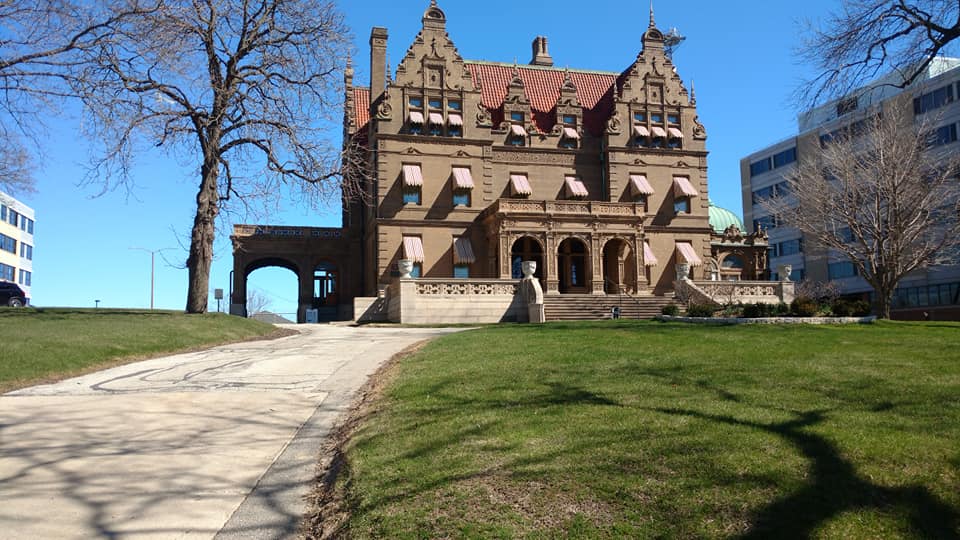 Captain Frederick Pabst’s gilded age mansion was easy to find. My son said it reminded him of a castle. I suppose it rather does with its brown coloring, place on top of a slight hill, and its massive size.
We got there at 10:00 a.m., but the tour was already booked. So my son and I walked around the grounds and took some pictures until the next tour at 10:30 a.m. The guide did a great job of balancing the architecture, social, and economic histories of the massive house all in under an hour. Prepare to do some stair climbing because all three floors are included in the tour. At its conclusion, I felt I knew a little bit about the Pabst family and wanted to know more about the house. I did end up purchasing two books in their gift shop. Sure, I could have bought these books far cheaper online, but this way I know some of the money went toward the upkeep of the house.
If the history of beer, gilded age mansions, or the Catholic Diocese of Wisconsin interests you at all, I would highly suggest giving this tour a try if you find yourself in Milwaukee, Wisconsin.
Books I purchased:
- John C. Eastberg. The Captain Frederick Pabst Mansion: An Illustrated History. Milwaukee, Wisconsin: Captain Frederick Pabst Mansion, Inc., 2009. ISBN: 9780982381007.
- Thomas C. Cochran. The Pabst Brewing Company: The History of an American Business. Cleveland, Ohio: BeerBooks.com, 2006. ISBN: 9780966208450.
- Captain Frederick Pabst Letter
Local Tours (2013)
Des Moines, Iowa

One of the areas that are seeing revitalization is north of downtown. As you walk down the streets you see homes in a variety of stages. The newly restored sitting next to dilapidated structures with questionable occupants. But the area has promise and you can see it in the diverse neighborhood rich in history. Many of the homes date back to the 1870s. Before Terrace Hill (governor’s mansion) became the home for Iowa’s governors, the head of the executive branch had to make due with their own residence. The picture to the right is of 1618 Oakland Ave. Former Governor Frank Jackson resided in the home from 1894-1896 (If you’d like to read about the sad state of this home please click here).
If you’re in Des Moines next weekend and want something interesting and fun to do, visit the Riverbend Neighborhood Historic Home Tour. Many of the homes have been painstakingly restored, while others are in the process. Some of the owners are more than happy to tell you about their restoration experiences as well as give you information about the home’s history. My husband and I have been talking about doing this tour for years. But either the weather hasn’t cooperated or we’ve been in the southern part of the U.S. during the early months of September. I’m glad we finally went this year. It was a beautiful day. Cool breezes. Lots of warm sun and the chance to look and wonder what it would have been like to see many of the homes in their original glories.
Glore Psychiatric Museum (2013)
St. Joseph, Missouri
In the late 19th century, hospitals like this one were cities on to themselves. Everything was taken care of onsite from medical care to growing and preparing food. Strolling through each floor of the museum, I was struck by overwhelming waves of sadness. People didn’t come to asylums like this to get better. They came to live and die alone. One display shows a room no bigger than a prison cell, painted a stark white with a single bed, changing screen, and ratty rocking chair. A battered suitcase lay on the made bed. Many were told to bring only a few items and one good outfit for it would be the clothes in which they were buried. In the morgue on the lower floor, corpses were stored at around forty degrees in small metal refrigerators either to await an autopsy or for relatives to claim them. More often than not, relatives were too ashamed to claim the body, and many patients were buried at the hospital some without even a name only a white marker with a number. Even worse, sometime in the 1960s, an order was given to push the graves over and bury them since it was too expensive to mow around them.
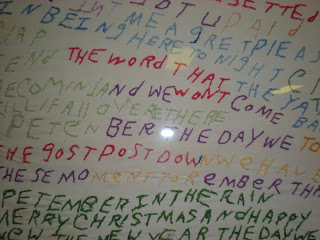
Treatment varied. The more cognitive patients, they were given tasks. Some a broom and told to sweep the floors. Some worked in the kitchens or on the grounds performing maintenance or weeding the gardens. Church, singing, and crafts were encouraged. On the second and third floors, patient art was displayed ranging from beautiful abstract pieces, and pin art, to ceramics. One image still sticks in my head. It was a large white sampler, but instead of the alphabet or numbers, it was the rambling embroidered sentences in different colors. Some were pastels and made sense while others were red or black and a jumbled mess. It was an interesting way to see inside this schizophrenic mind. For the more severe cases, cold shower baths were ordered. Electroshock therapy (some private practices still use this technique today). Lobotomies and insulin-induced comas. Violent patients were put in restraints or solitary confinement in boxes or cells to avoid harm to themselves, workers, or other patients.
To be considered a model patient, one would sit in a rocking chair and make no demands on anyone. For a moment I imagined sitting on the front porch overlooking the grounds, hearing the squeak of my chair over the chaos around me. It’d been so long since I heard the sound of my own voice I’d forgotten what it sounded like. My image stopped there. I realized I never want to endure that kind of loneliness.
If you’re looking for something that isn’t the run-of-the museum and finds yourself in St. Joe. Check this museum out. I highly recommend it.
 L.M. Elm, Historical Novelist