Blog

Research

Comfortable in Alone

I’ve put Papas’ Bones away for a while. Instead, I’m concentrating on its sequel, Comfortable in Alone, which picks up fourteen years later. I’ve been writing some, but I still don’t feel comfortable with the time period, so I’m spending the majority of my time researching.

I just finished two engaging books: Some Wore Bobby Socks by Kelly Schrum which explores youth culture from 1920-1945, and Ronald Chester’s Unequal Access which is part history and part interviews about women and their law school experiences from the 1920s-1940s. Next on my list is Soldiers to Citizens & a reread of Lynn Peril’s College Girls.

I think the most difficult part about writing historical fiction is to not get so immersed in the research you forget about the story. So far that hasn’t been a problem 🙂

Writing

Life in 1932

When writing Papas’ Bones, I tried to be as accurate as possible. Some of my readers have commented on terms and events that were unfamiliar to them. So, I’ve compiled a small list below:

Adhesive Tape: Since evening dresses were mostly all backless in the 1930s, adhesive tape was a popular substitute if one couldn’t afford special kinds of brassieres.

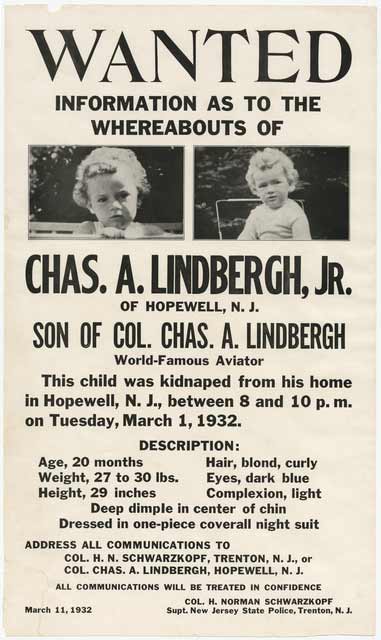
Charles Lindburg Jr. Kidnapping: The son of famous Charles Lindberg, disappeared from his nursery in March of 1932. It was one of those headlines no one could get away from.

Clap, The: Slang for the sexually transmitted disease gonorrhea

Cloche: A bell shaped hat worn by women, usually made of felt, and meant to fit closely around the head.

Crawford, Joan: Probably remembered in pop culture today because of Faye Dunaways’ portrayal of her in the movie Mommie Dearest. In the 1930s, Joan Crawford was the idol for independent flapper women.

Fitch, F.W.: Was a real person. He made his fortune in hair tonic and based his operations in downtown Des Moines, Iowa. His interests both benign and illicit were documented in many sources.

Golf/Clubs: The numbering of golf clubs did not become popular until the middle thirties. Until then clubs were called all sorts of names and golfers could carry as many of them in their bags as they wanted. Tees were just starting to become popular but many still used the old sand and tee molds. Professional golfers, like Walter Hagen, were not idolized like professional golfers today. If one wanted to make a name for them self as a golfer they tried out for the numerous armature titles.

Packard: Were an American luxury car made from 1899-1958.

Prohibition: After the passing of the 18th Amendment, the sale, manufacture and distribution of alcohol became illegal.

Tommy Guns: A sub-machine gun invented in 1919 and made popular by the Gangster Films of the late 1920s early 1930s


Vare, Glenna Collette
– Was a popular women’s ameture golfer from the 1920s to the 1930s . She was known for her consistent drives of 250 yards or more. Some comtempories of her time called her the female Bobby Jones. She published two books which are long out of print: Golf for Young Players (Little Brown & Company, 1926) & Ladies in the Rough (Alfred A. Knopf, 1928). Check out her biography at the World Golf Hall of Hall of Fame.

I’ll be adding more as I go along…
Research

Postcards – Snapshots into History

I love collecting postcards of Des Moines, Iowa pre-1950s. Not only does the scene give you a glimpse into a place and moment in the past, the quick note jotted on the back can be full of slang, humor or mystery. They’re inexpensive (usually about $.50 – $2.00) at a flea market or antique store and don’t take up a lot of space. The postcard to the left I found in a antique store on my way to Chicago. While it says it’s a night scene, I’m guessing it was probably from a negative that was touched up to make it look like it was night. It was postmarked 1914. It’s crazy to think this little piece of history is ninety-seven years old. If you stand in this same spot now on Walnut Street , the library and bridge are still there but the streetcar tracks and the coliseum are not.

Writing

Laptop Alternative

I’ve always been easily distracted. The cute fuzzy squirrels outside or the playful robins — at least at my full-time job, I’m too short so I’d have to stand up to look out the window, otherwise, I’d never get any work done. I find that I’m just as easily distracted with my writing, especially when I’m on my desktop or laptop. It’s too easy to find a game to play or surf the web. When my laptop finally went to computer heaven, I decided I didn’t want to spend the money on a new laptop. We have an Ipad and a Nook, but neither is geared toward long-term writing. The Ipad could be, but I’ve tried it, and even with a wireless keyboard, I didn’t find it all to my liking. My wrists hurt after a while and no matter how I adjusted the font size, it always gave me a headache. I still wanted the functionality and portability of a laptop, but I didn’t want the distractions or the price that usually came with them. Then I started thinking about when I was in junior high before laptops were fiscally feasible for the masses. There were these simple word processing units. I couldn’t remember their names, but after some searching on eBay and Amazon, I found them.

Neo Direct makes them now and markets them for student K-12 use. A brand new one will cost you about $169.00. If you’re careful and do some research, you can find a used one on eBay or Amazon for between $20 – $40. They’re light, about two lbs., and the battery life is about 20-25 hours, much longer than an average laptop battery. You can write and edit Office Excel, Word & PowerPoint files. There are eight different files where you can store up to eight different stories/chapters/etc. for a total of 100 pages of storage. Hook up the device to your PC through a USB cable, pick the program you want to transfer the file to, and hit send. The text is transferred. I found an Alphasmart 3000, which is no longer being made, but there is still a website out there for drivers and manuals if you want to read up on the product. I did have some difficulty getting into the device at first because it was password protected and the person I bought it from did not supply the password. After some searching, I was able to restore the Alphasmart to its original settings using the factory preset password (which was: ‘think’). Overall I’m very satisfied with the product. It does exactly what I want it to do: it lets me write, and only write, and limits my distractions.

Publishing

May 2011 Agent Quest

Wow! June’s just around the corner again. Here’s my stats so far:

Total Queries Sent: 184
Total Rejections: 168
Total Partial Requests: 5
Total Full Requests: 1
Waiting on Responses: 16

Still looking. Someone will eventually take interest. I just gotta keep trying 🙂

Writing

POV (Point of View)

As a reader I don’t think about POV too much, but as a writer, I think about it often. While plot is the engine of your story, POV must be the transmission. It’s a crucial element that should be based on both the the story and the writer’s needs.

Examples of Points of View:

1st person:

Pronouns used: We or I.

The Good
– It provides the most intimacy between the reader and the narrator.
– The reader can actually be inside the character’s head.

The Bad
– There can be a tendency to tell instead of show.
– The closeness of narrator & reader may become tedious.
– The reader is restricted to only one character’s perceptions.

2nd person:

Pronouns used: You

The Good
– Forcefully puts the reader into the narrators shoes.
– The reader becomes an active participant.

The Bad
– It can feel as if the reader is being bossed around.

3rd person:

Pronouns used: He, She, They

The Good
– The most common form of story telling.
– It provides an objectionably that first & second person cannot provide.

The Bad
– It lacks the intimacy between narrator & reader.

Types of third person:

– Omniscient – God like entity that is all knowing and can come and go inside each character’s head

– Objective – Narrator can only comment on what they see, they cannot get into he minds of the characters.

– Limited – The narrator can only view the thoughts and expressions of one single character.

I wrote the first couple drafts of Papa’s Bones in third-person limited. I chose this view point because it was the easiest for me. But as I started my revisions, I began to notice a repeated pattern. Too many asides from the third person narrator into the main character’s POV. I’ve seen many authors do this (and it annoys me >-<). Some, who are even on the best seller lists. All that head hopping slows the action and numbs the emotions the narrator is trying to convey. I needed to admit that I was doing the same thing in my own writing–and it needed to stop. So, I began to ask myself, which POV would make this a stronger story? How close do I want the narrator and reader to be? Second person was out and third person didn’t convey the closeness I needed. I had to change my POV to first person. Now, I could have changed my ‘shes’ to ‘Is’ and left it at that, but that wasn’t enough. I wanted to do it right. This meant going back and reading many more period diaries, novels, and watching more of those old black and whites movies to get the slang and customs of the 1930s. It was more work, but in the end I believe I told a more engaging story by changing my point of view.