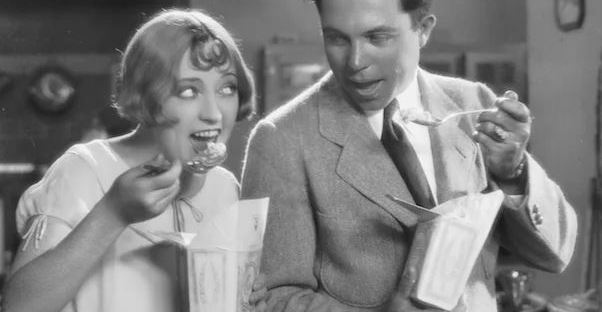
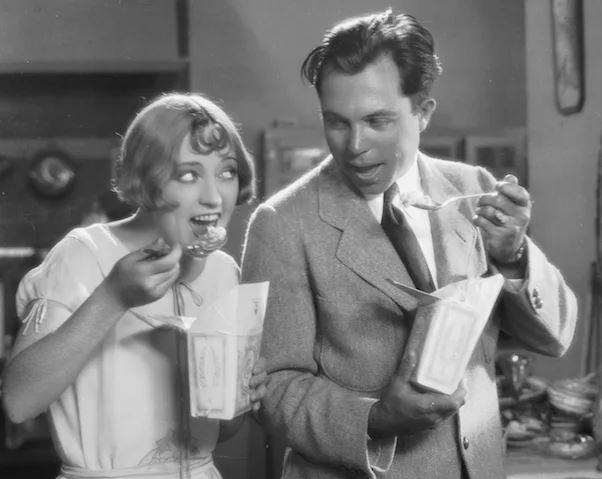
John Kobal Foundation / Getty Images
History
Chinese food was one of the first ‘fast food’ alternatives in the early twentieth century. It was cheap, incredibly tasty, and wholly an American invention. In the 1920s people were flushed with extra cash. Chop suey houses were often open late to serve the partying crowd. Or patrons who desired a taste of something more exotic than what they served at home.1
Des Moines, Iowa
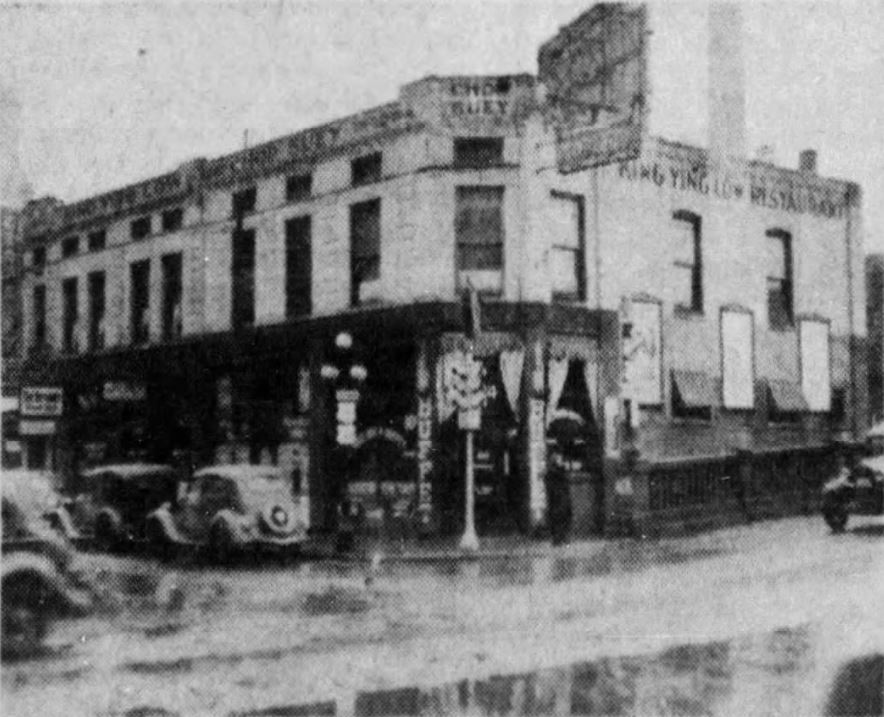
Considered by many to be Des Moines’ oldest Chinese restaurant, King Ying Low opened its doors on 5th and Locust Streets in 1902. After a stint in the Minnesota important business, Lee Dinn was persuaded to travel south because “Des Moines people are good with whom to deal.” The restaurant moved to its second location on the second floor of 618 Mulberry Street where the business remained until a reality company purchased the building and demolished it for a parking lot in 1940.2

The stairs leading to the second floor of the Mulberry Street location were rickety and treacherous in the winter. When guests finally arrived on the second floor, they were greeted by waves of grease and fried food. Marble table tops offered chopsticks rather than silverware. Staff dressed in black trousers, white shirts, and black bow ties. If you couldn’t afford to venture up to the restaurant, they had their own delivery service which mixed everything and placed the food in narrow, paper boxes with cut-out folded tops.3
Menu:
Steaks ($ .70 which is what people came in for), salads, ice cream, chop suey (hash style broth with bits of veggies and meat), chow mien, fish (cooked in a brown sauce), egg rolls, egg foo (Kid’s menu). Drinks – Tea or ‘no-mas-das” or rice liquor.4
Sources:
- Coe, Andrew. Chop Suey. New York: Oxford University Press, 2009. Keiles, Jamie Lauren. “The History of Jews, Chinese Food, and Christmas, Explained by a Rabbi.” Vox. 25 December 2020. Accessed: 26 February 2021. Lewis, Sinclair. Main Street. New York: Library of America, 1992. Liu, Haiming. From Canton Restaurant to Panda Express: A History of Chinese Food in the United States. New Brunswick, New Jersey: Rutgers University Press, 2015. Yong, Chen. Chop Suey, USA: The Story of Chinese Food in America. New York: Columbia University Press, 2014. Wouk, Herman. Marjorie Morningstar. Thorndike, Maine: G.K. Hall, 1996. ↩︎
- “King Ying Low, Des Moines’ Oldest Chop Suey, Passes Into New Hands — Lee Din Going Home.” Des Moines Tribune. Des Moines, Iowa: 08 April 1924, 1, 5. “King Ying Low Cafe to Move.” Des Moines Register. 04 August 1940, 42. ↩︎
- “About February 1.” Des Moines Tribune. Des Moines, Iowa: 26 December 1936, 3. “King Ying Low Restaurant Grand Opening Thursday.” Des Moines Tribune. 04 September 1940, 5. Rude, Emelyn. “The American History of Takeout and Delivery.” Time. Online. 14 April 2016. Accessed: 11 June 2023. ↩︎
- “About February 1.” Des Moines Tribune. Des Moines, Iowa: 26 December 1936, 3. “King Ying Low Restaurant Grand Opening Thursday.” Des Moines Tribune. 04 September 1940, 5. ↩︎

 L.M. Elm, Historical Novelist
Hi. Thanks for the write up about King Ying Low. I think my great grandfather, Charles Chong, was a part owner and manager of the place. Or at least that is what the Des Moines Register obit, March 2, 1932, said he was. But I did not see his name mentioned in your write up. By changes, did you run across his name when doing the research? Thanks. Tim
LikeLike
Hi Tim,
Thanks for reading my blog!
I mostly pieced together Des Moines Register & Des Moines Tribune articles for the story. From 1902-1932, both papers had about 41 references to Charles Chong (even a photo of him for the obit 03/01/1932 Des Moines Register, page 11).
L.M. Elm
LikeLike