Writing

Elmore Leonard, Crime Novelist

MV5BMTgzNjQ4NjM1NF5BMl5BanBnXkFtZTcwNzQ4OTEzNw@@__V1_SY317_CR11,0,214,317_Okay I say I don’t watch too much T.V. Well, I don’t but there are a few shows I don’t like to miss. Supernatural. Breaking Bad. Smallville (when it was on) and Justified.

Justified stars Timothy Olyphant as U.S. Marshall Raylan Givens, a character created by crime novelist Elmore Leonard. His sparse, in your face style stands beside great crime novelists like Chandler and Dashiell. He died yesterday at the age of 87.

He’ll be missed.

I love his 10 Rules of Writing. Even if you’re not into crime novels, his advice is spot on.

Here’s the list:

  1.  Never open a book with the weather
  2. Avoid prologues
  3. Never use a verb other than ‘said’ to carry dialogue.
  4. Never use an adverb to modify the verb said “said.”
  5. Keep your exclamation points under control.
  6. Never use the words  ‘suddenly’ or ‘all hell broke loose’.
  7. Use regional dialect, patios, sparingly.
  8. Avoid detailed descriptions of characters.
  9. Don’t go into great detail describing places and things.
  10. Try to leave out the part that readers tend to skip.

Here’s some additional links:

http://www.nytimes.com/2001/07/16/arts/writers-writing-easy-adverbs-exclamation-points-especially-hooptedoodle.html?pagewanted=all&src=pm

http://www.npr.org/blogs/thetwo-way/2013/08/21/213790688/crime-novelist-elmore-leonard-dies

Writing

Character Transformation

untitledI don’t watch a whole lot of television. But over maternity leave, television episodes were the easiest to watch while caring for an infant. One series I always wanted to see but never got around to was Breaking Bad. Last night was the first of eight final episodes. And all I can say is: WOW!

Few television series, or book series, for that matter show the transformation of a character as wells as Vince Gilligan and Bryan Cranston have with Walter White. Comparing the Walter in the first season to fifth season, I was struck by where Walter White has landed. Gone is the meek chemistry teacher fighting the prospect of economic poverty and lung cancer, to become a drug kingpin willing to destroy anyone that gets in his path.

I think what makes this character so intersting is that he didn’t start out evil. He chose to be that way. Life is about choices. And in Walter’s case, very, very bad choices. But it isn’t just the fact that Walter makes good meth or he’s ruethless. His greatest gift is that he lies. He lies so well to everyone. His wife. His drug partner, Jesse. His kids. His brother-in-law, Hank (who’s also a D.E.A. agent). And most of all himself. He even made me convinced too when he told Hank he was just a lolely car wash owner. Then Hank tells him he doesn’t recognize the man Walter has become. Then Walter tells him to ‘tread lightly’.

Oh, my goodness. Just one sentence and Walter tells the entire audience just how he’s changed. It’s also a great hook. I want to see how this story ends. And what happens to Walter. Will the cancer finally catch up to him. Or will someone else finish off Walter before the cancer does? Seven more episodes left in this amazing series.

If you haven’t watched any of this yet and you have Netflix, download it. Or watch AMC. I’m sure they’ll have a marathon of the series again soon.

Writing

Word Play

Most published authors will tell you to read lots and read often. Fiction. Non-Fiction. Anything to keep your mind concentrated on the story. Currently, that’s where I’m at. After reading a couple books on the craft of mystery writing, I closed both of them in irritation. Write sympathetic characters. Write sympathetic plots. While sympathy is an okay word, it wasn’t the RIGHT word.

A scene from the movie Road House kept popping into my head. When one of the bouncers asks their cooler (played by Patrick Swayze) how to respond to an insult, the cooler responds with:  “It’s two nouns combined to elicited a prescribed response.” To me sympathy elicits feelings of affection, maybe sorrow brought on by someone sharing their feelings with me. So I care about this person. I have a stake in their welfare. But is this the right word to use to describe how a literary character makes me feel? No. Not really. I think the RIGHT word is empathy.

Here are the two definitions from Word English Dictionary:

Sympathy:  n. 1)the sharing of another’s emotions, especially of sorrow, or anguish; pity; compassion.

Empathy:   n. 1)the power of understanding and imaginatively entering into another person’s feelings.

Okay. We’ve looked at both definitions. Let’s take the word sympathy head on. Would you offer sympathy to a character like Hannibal Lector, Humbert Humbert, or Dexter after they murder someone? No. You’d be repulsed. You’d empathize—after entering into the minds of these characters you see and understand the reasoning behind their actions. You may not agree with them. But you UNDERSTAND. And that’s what a writer must do. Get the reader to understand your characters. Find them interesting enough to see if they get thrown in the slammer or killed in the same vein as they’ve killed.  Words are the atoms of any writing. A wise man once said if you take the words cat house and house cat, they’re the same words but mean two entirely different things. And it’s important to use them correctly and in the right order or as in the cat & house case, you’re liable to get slapped in the face.

Research

Writer’s Digest–HowDunit Series

This is a series by Writer’s Digest that ran from 1990-2007. If you write in the mystery/thriller/crime genres, you’ll find yourself refering to these books often. I know I do. Several of these I have in my collection.

Books:

  • police (gray)Bintliff, Russell. Police Procedural: A Writer’s Guide to the Police and How They Work. Howdunit Series. F+W Media, Inc., 1993. ISBN: 9780898795967 (Out of Print)


  • privateeyesBlythe, Hal. Private Eyes: A Writer’s Guide to Private Investigating. Howdunit Series. F+W Media, Inc., 1993. ISBN: 9780898795493. (Out of Print)


  • howdunitBoertlein, John . Howdunit: How Crimes Are Committed and Solved. Howdunit Series. F+W Media, Inc., 2007 . ISBN: 9781582975283


  • ameatureChase, Elaine Raco. Amateur Detectives: A Writer’s Guide to How Private Citizens Solve Criminal Cases. Howdunit Series. F+W Media, Inc., 1996 . ISBN: 9780898797251 (Out of Print)


  • modusopertuniCorvasce, Mauro V. Modus Operandi: A Writer’s Guide to How Criminals Work. Howdunit Series. F+W Media, Inc., 1995. ISBN: 9781582971377


  • murderoneCorvasce, Mauro V. Murder One: A Writer’s Guide to Homicide. Howdunit Series. F+W Media, Inc., 1997 . ISBN: 9780898797732 (Out of Print)


  • justthefactsFallis, Greg. Just the Facts, Ma’Am: A Writer’s Guide to Investigators and Investigation Techniques. Howdunit Series. F+W Media, Inc., 1998. ISBN: 9780898798234 (Out of Print)


  • missingpersonsFaron, Fay. Missing Persons: A Writer’s Guide to Finding the Lost, the Abducted and the Escaped. Howdunit Series. F+W Media, Inc., 1997. ISBN: 9780898797909 (Out of Print)


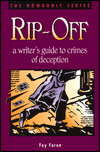
  • ripoffFaron, Fay. Rip-Off: A Writer’s Guide to Crimes of Deception. Howdunit Series. F+W Media, Inc., 1998. ISBN: 9780898798272 (Out of Print)


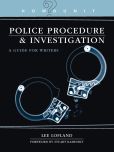
  • police (color)Lofland, Lee. Police Procedure and Investigation: A Guide for Writers. Howdunit Series. F+W Media, Inc., 2007. ISBN: 9781582974552


  • forensicsLyle, D.P. Forensics. Howdunit Series. F+W Media, Inc., 2008 . ISBN: 9781582974743


  • malicious intentMacTire, Sean P. Malicious Intent : A Writer’s Guide to How Murderers, Robbers, Rapists and Other Criminals Think. Howdunit Series. F+W Media, Inc., 1995. ISBN: 1582971579


  • armedanddangerousNewton, Michael. Armed and Dangerous: A Writer’s Guide to Weapons. Howdunit Series. F+W Media, Inc., 1990. ISBN: 9780898793703 (Out of Print)


  • bodytramaPage, David W. Body Trauma: A Writer’s Guide to Wounds and Injuries. Howdunit Series. F+W Media, Inc., 1996 . ISBN: 9780898797411 (Out of Print)


  • deadlydosesStevens, Serita Deborah. Deadly Doses: A Writer’s Guide to Poisons. Howdunit Series. F+W Media, Inc., 1990. ISBN: 9780898793710 (Out of Print)


  • BookofpoisonsStevens, Serita Deborah. The Book of Poisons. Howdunit Series. F+W Media, Inc., 2006. ISBN: 9781599634401


  • causeofdeathWilson, Keith D. Cause of Death: A Writer’s Guide to Death, Murder and Forensic Medicine. Howdunit Series. F+W Media, Inc., 1992. ISBN: 9780898795240 (Out of Print)


  • sceneofthecrimeWingate, Anne. Scene of the Crime: A Writer’s Guide to Crime-Scene Investigations. Howdunit Series. F+W Media, Inc., 1992.  ISBN: 9780898795189 (Out of Print)

Other Links: